Skip to content
Priority Sectors

Nine sectors, and an advocacy voice in Canberra.

For more than four decades, AKBC has worked alongside business leaders, governments and industry to advance policies that deepen trade and investment, strengthen economic security, improve market access and create new commercial opportunities between Australia and the Republic of Korea.
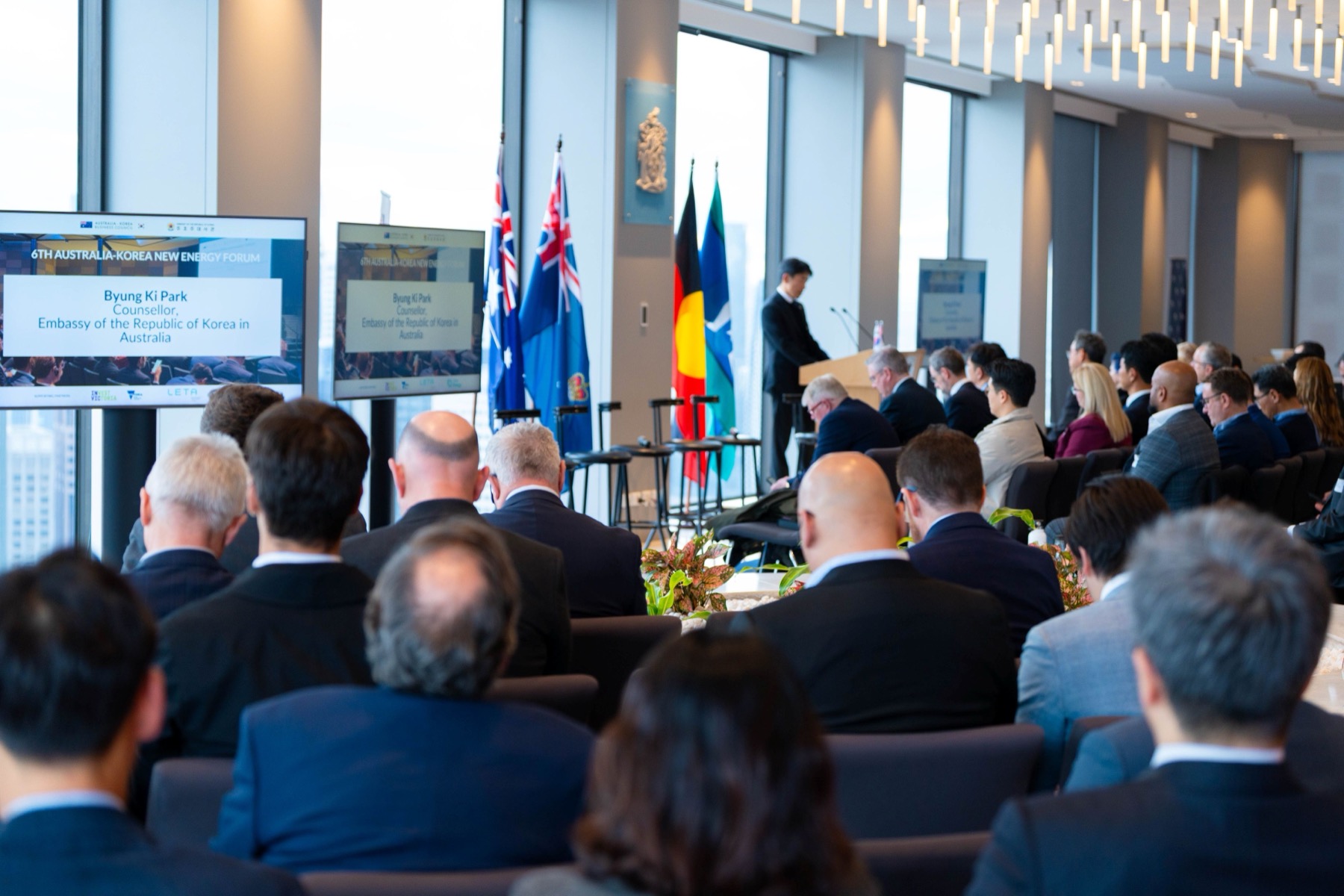
Delegates seated for the 6th Australia-Korea New Energy Forum, with a speaker from the Korean embassy introduced on screen
6th Australia-Korea New Energy Forum

The nine Priority Sectors

AKBC’s own name for its industry-specific sub-committees. Nine sectors, in the order their own Priority Sectors page lists them, connecting members with senior leaders, investors, government stakeholders and decision-makers shaping the Australia-Korea relationship.

Critical Minerals and Rare Earths
Defence and Space
Education and Research & Development
Energy and Decarbonisation
Financial Services and Investment
Food and Agriculture
Infrastructure and Real Estate
Sports Diplomacy and Soft Power
Technology and Innovation

Seven Industry Groups

Advance, Immerse and Accelerate members get access to these seven specialised Industry Groups, as their own become-member page names them. Four of the seven names do not match the nine Priority Sectors word for word, and three Priority Sectors (Infrastructure and Real Estate, Sports Diplomacy and Soft Power, Technology and Innovation) have no Industry Group counterpart at all. Both lists are theirs and neither has been edited to match the other.

Critical Minerals
Defence and Space
Education
Energy
Financial Services
Food and Agriculture
Innovation in Health and Biotechnology

Which membership tiers carry Industry Group access

The Industry Experts Panel

A newly established advisory group providing specialist knowledge and strategic guidance to the Board and the Industry Groups, as their own page describes it. Their page publishes a short biography for each and no portrait for any of them.

Chief Executive Officer
Professor Gordon FlakePerth USAsia Centre
Chief Executive Officer
Sang HongELP Corporation Co Ltd
Managing Director & CEO
Steve KimGreenPlus Australia
Principal, Asian Strategic Partnerships
Seon KoThiess
Partner
Heejung Cecilia LimEastpoint Partners Limited
Chief Executive Officer
Charles MoonSDF Group
Managing Director
Marie PicconeManbulloo Limited
Managing Director
James RheeProgressive Green Solutions
Managing Director & CEO
Rowena SmithAustralian Strategic Materials
Partner
Tom ShonMinterEllison
Managing Partner
Peter UnderwoodIRC Consulting
Chief Sustainability Officer
Dr Scott WatkinsKISCO
Director, Head of Korea Desk
Paul YooPwC Australia (Sydney)

The panel, with each adviser’s own biography

How AKBC advocates

Their own account of what advocacy is for and who it represents.

The Australia–Korea Business Council (AKBC) is the leading independent business organisation dedicated to strengthening the Australia–Korea relationship.

akbc.com.au/advocacy
  1. The annual Canberra Leadership Summit
  2. Policy submissions to Australian and Korean governments
  3. Direct engagement with Ministers, Parliamentarians and senior officials
  4. Bilateral government and industry roundtables
  5. Industry consultation with members and stakeholders
  6. Strategic policy papers and thought leadership
  7. Collaboration with partner organisations in Australia and Korea
  8. Representation of member priorities through the Australia-Korea policy dialogue

Current advocacy priorities

What AKBC says it advocates for, from its own advocacy page, read 22 September 2026. Its own words: advocacy is guided by the long-term competitiveness of the bilateral relationship, "rather than representing the interests of any single organisation."

Asia capability
A submission to the federal inquiry into Australia’s Asia capability, arguing Korean should be classified a Priority Language rather than a Supported one.
Investment confidence and energy security
A submission on the Government’s proposed Domestic Gas Reservation Scheme, arguing new domestic energy policy should not undercut the contracts and financing behind Korean investment.
Air connectivity
Advocating for expanded capacity under the bilateral air services arrangement, for more direct passenger and freight routes between Australian and Korean cities.
Carbon capture and storage
Advocating for a bilateral framework letting carbon dioxide captured from hard-to-abate Korean industry be shipped to Australia for permanent geological storage.
An advanced bilateral partnership
Pressing government and business to widen the relationship beyond resources and energy trade into critical minerals, AI, defence industry, clean energy and life sciences.

The full advocacy page, on akbc.com.au

What the research produces

AKBC’s own authored reports, in the order their publications page lists them, each with the date they publish. Third-party reports the same page links (from MinterEllison, DFAT, KOTRA and ASPI) are not reproduced: they are someone else’s work, not AKBC’s.

Food for the SeOUL
Launched 2025. Food and agriculture trade under KAFTA, with Australian and Korean company case studies.
Strike While the Iron is Hot
Financial services. Published in English and Korean, 30 November 2022.
Bridges to the Future
Education: student mobility, research and institutional partnerships. Published November 2022.
Critical Minerals, Urgent Opportunities
Published in English and Korean, December 2021.
Mapping the Australia-Korea Hydrogen Intersections
Published in English and Korean, May 2021.
Food for thought
Four trends for food and beverage exporters entering Korea. Published 16 February 2022; the full report is members-only, non-members can read the first chapter.
Soft Power
Sports diplomacy and bilateral business outcomes. Released 2020.

Every publication, on akbc.com.au

A trusted, independent voice for the Australia-Korea economic partnership.

For more than four decades, AKBC has worked alongside business leaders, governments and industry to advance policies that deepen trade and investment, strengthen economic security, improve market access and create new commercial opportunities between Australia and the Republic of Korea.